January: tomatoes, then the freeze
In the middle of January the tomato plant was carrying fruit. That is not supposed to be the easy month for tomatoes, and the plant did not care.
On 24 January, with a hard cold snap on the way, about thirty onions went into the ground. Nothing was covered. The tomato stayed out too, on purpose, to see what a frost would actually do.
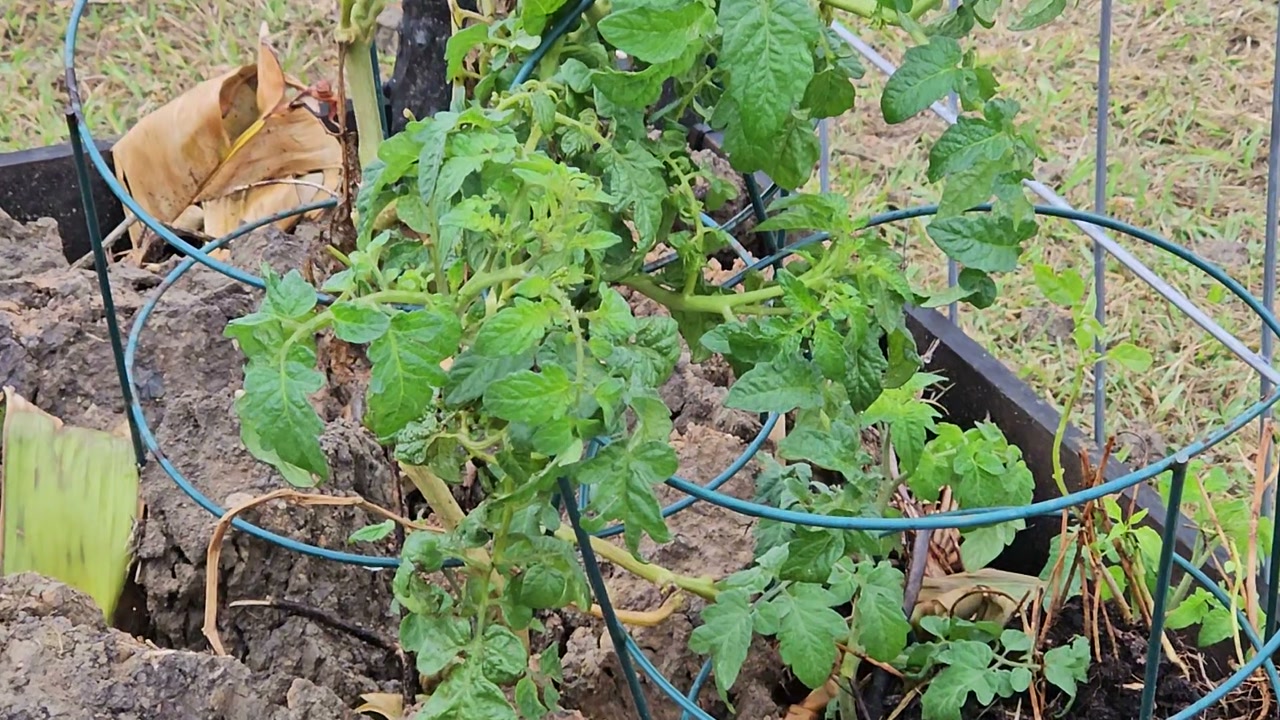
Four days later the answer was in. The tomato was badly damaged and its last small fruit did not look like it would make it. The onions were bigger than before. The banana plants had died back and broken, and by the end of the month they were cut down to the ground. The peppers looked like they might have survived.
A pigeon pea was in flower that same month. It had been planted too close to the porch and had grown up into the roof, which is a note for next time: give a pigeon pea more room than seems necessary.
February: the mulberry
The white mulberry has been shaped by hand for a couple of years. Its branches are twisted together as they grow, with the idea that it will one day make a shaded place to sit. More of it is trained along the fence, toward a fence full of berries.
By late February the buds were swelling. By late March they were tiny green berries.
March: let the broccoli flower
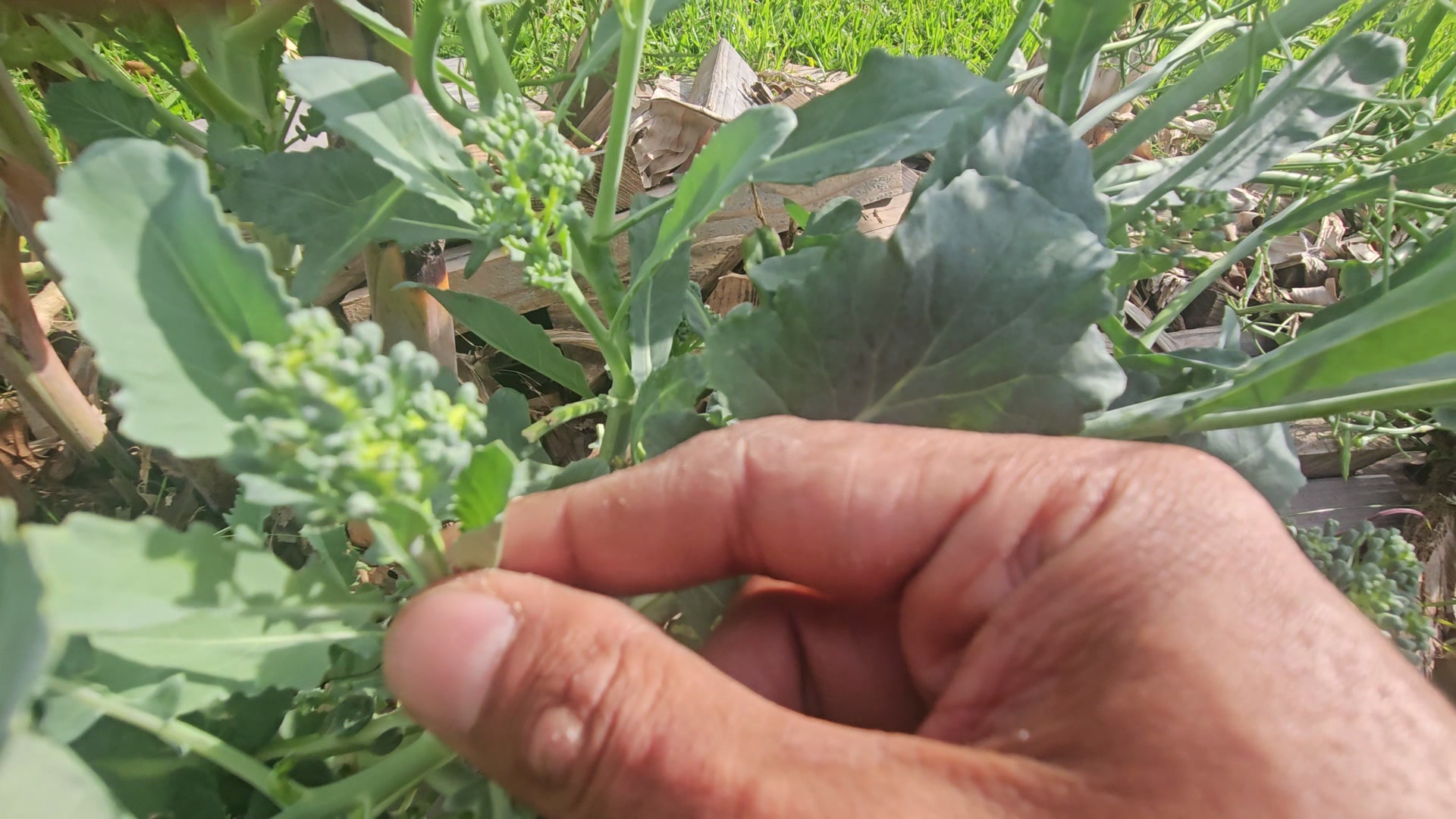
The broccoli bolted, and it was left alone. A bolted broccoli sends up tall stems of yellow flowers, and in the first week of March there were bees on them every time the camera came out.
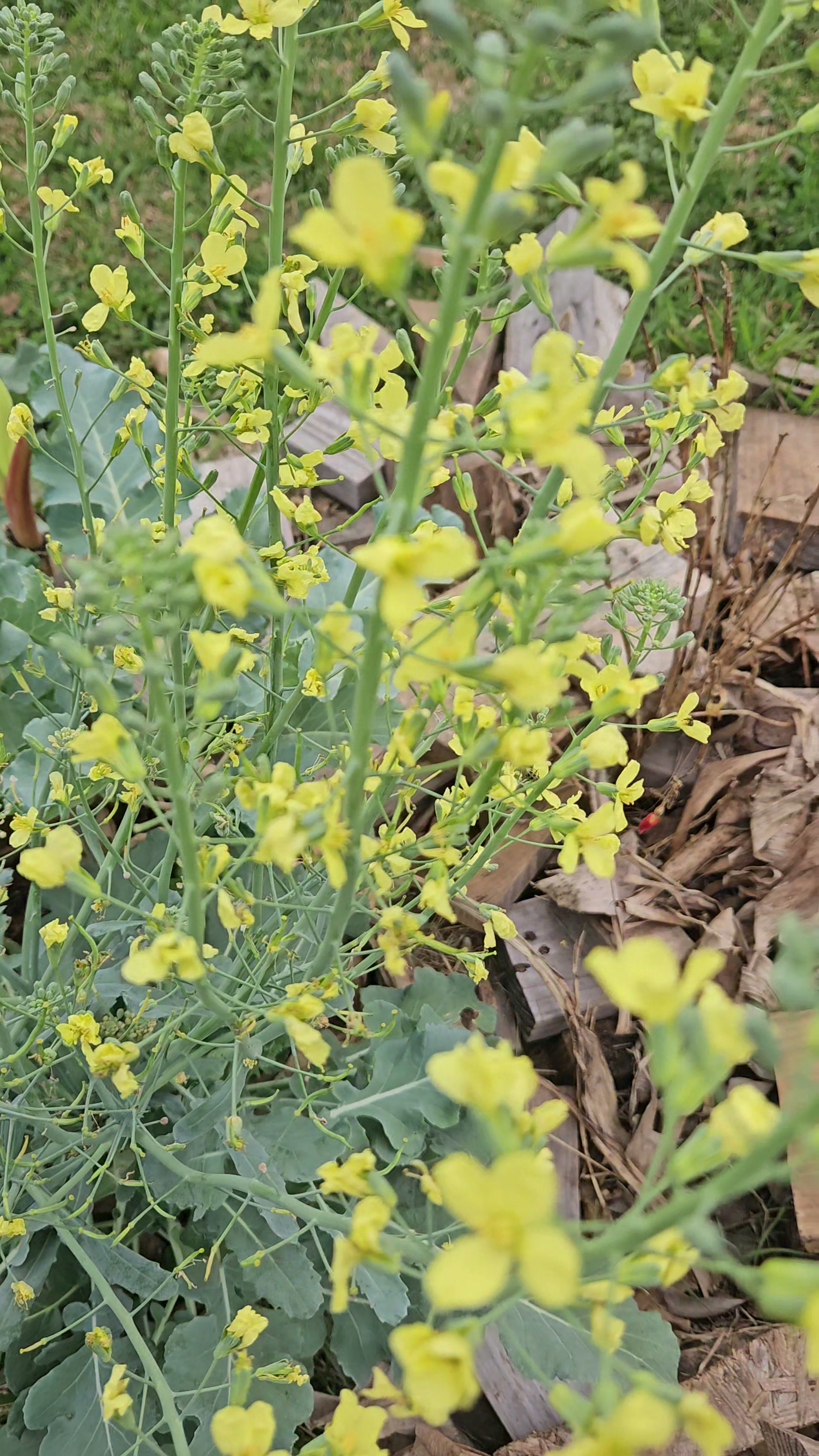
A night of rain and wind knocked the biggest plant over on 8 March. It kept flowering on its side. By 24 March the flowers had turned to seed pods, and the plan was to let them finish and collect the seed.
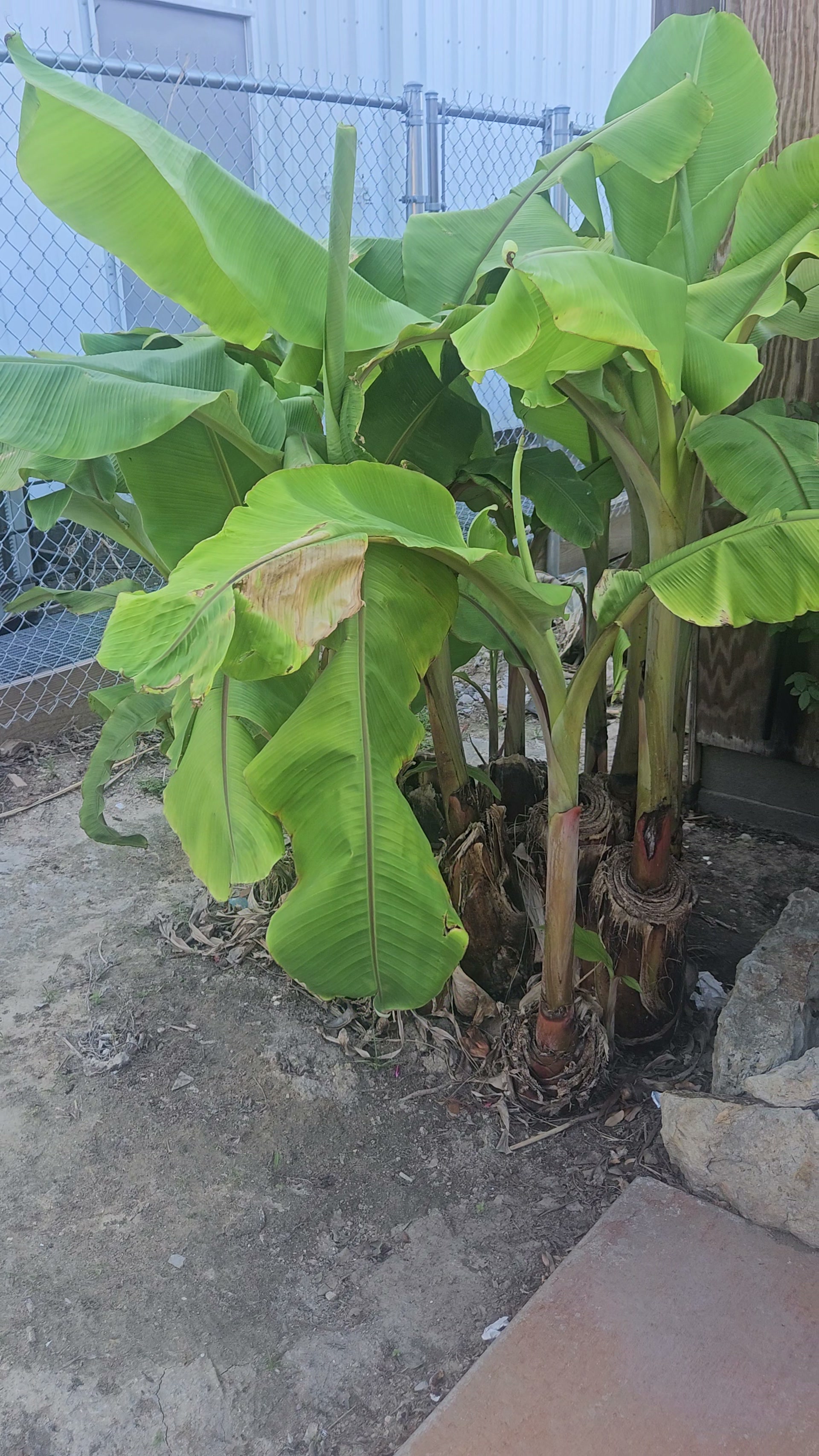
The banana stand at the back is where every other banana plant here came from. Each year one or two or three are dug out and replanted somewhere else. The ground is hard and it is a lot of shoveling.
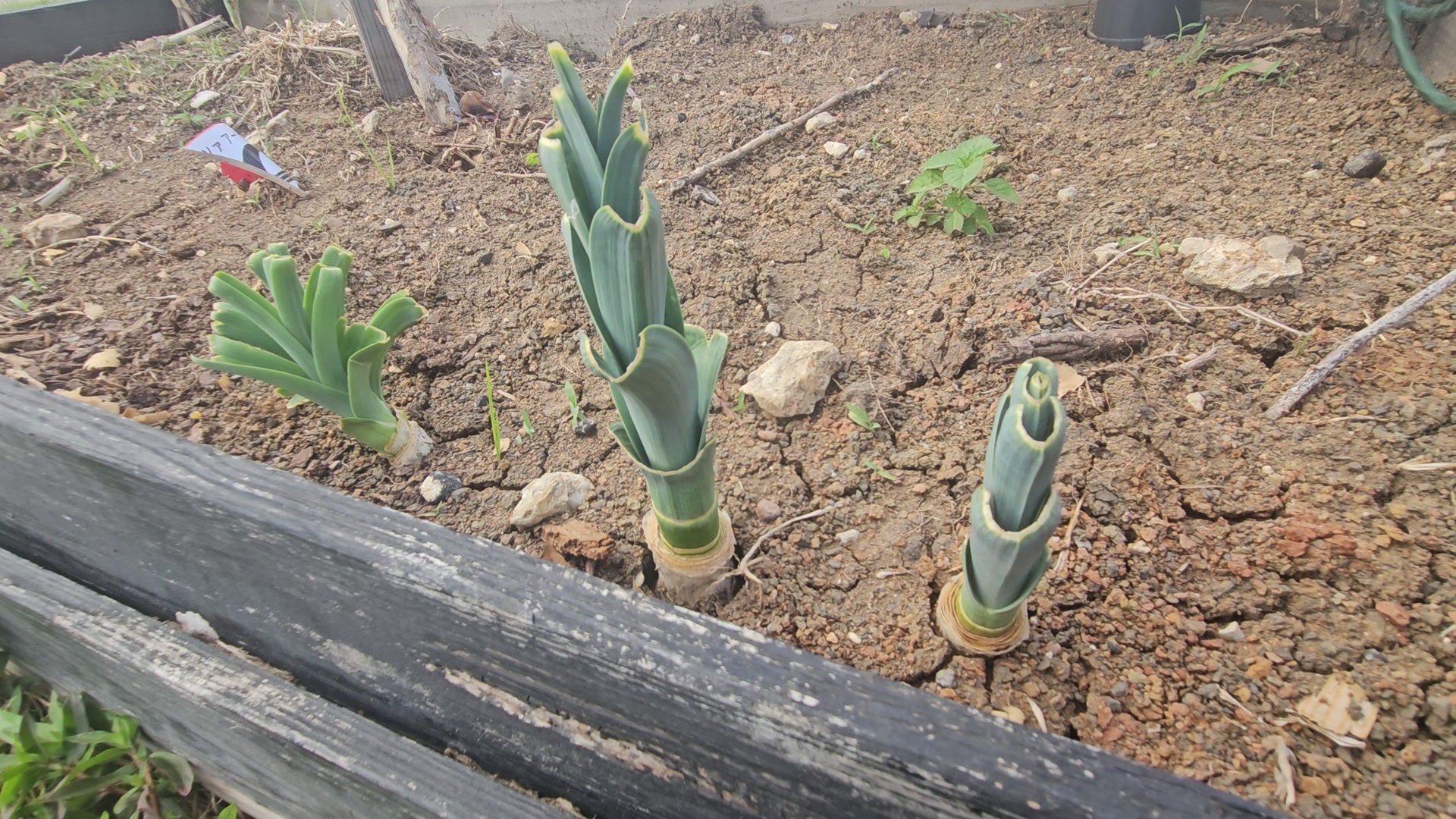
Late March was also planting time by the porch: corn sprouts in a row that is meant to grow into a wall of shade, the first marigold this garden has grown, potatoes, mint, zinnia seedlings, and three leeks kept as much for their looks as for eating.
April: a puppy and a zinnia
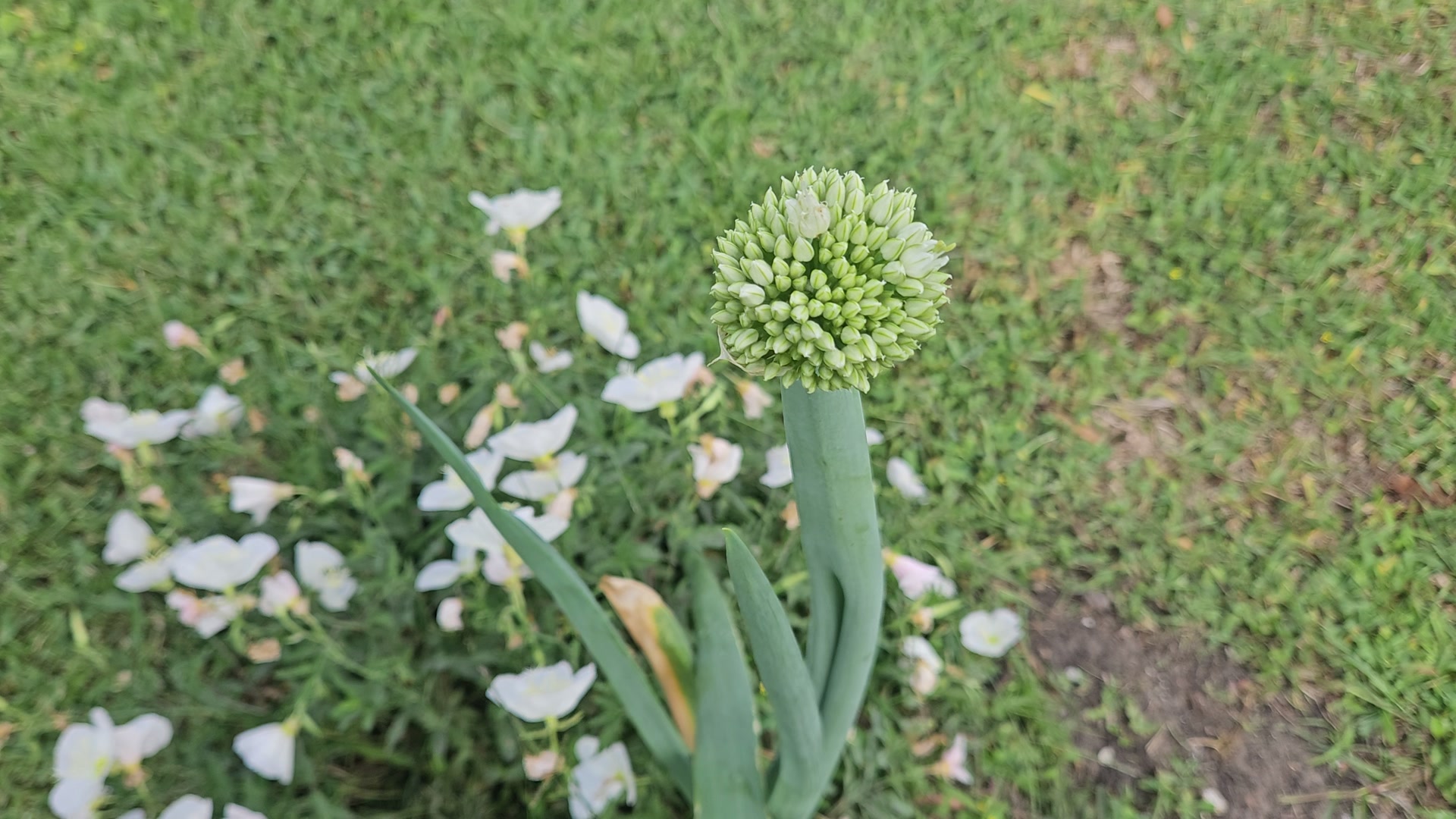
A new puppy found the corn before it got tall, and at least one sprout did not survive the meeting. A green onion that had been left alone opened a full flower head.
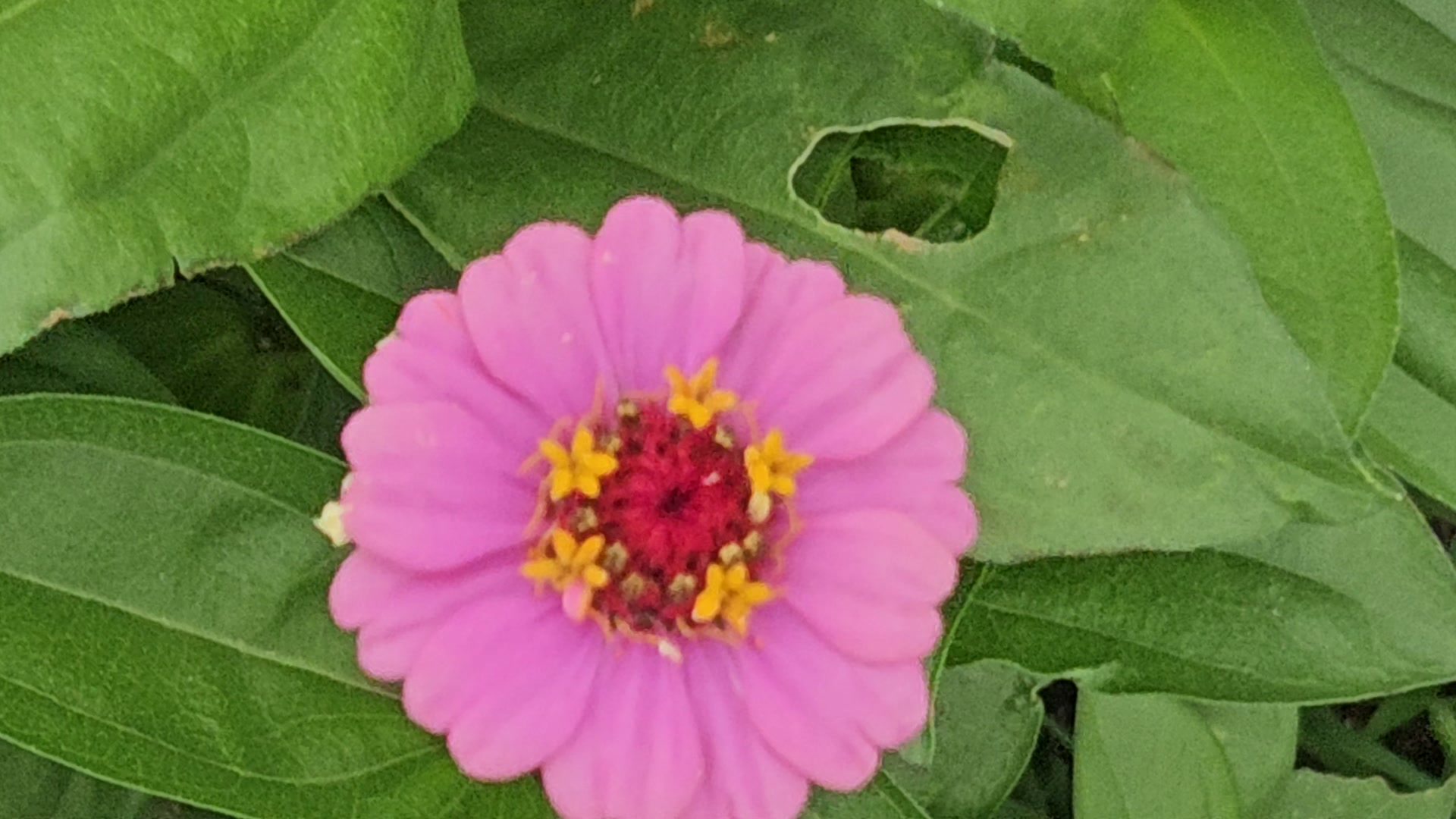
On 20 April the first zinnia opened, with more on the way.
What four months showed
- Onions planted just before a freeze came through it without cover.
- A tomato left out in a freeze did not.
- Banana plants cut to the ground in January were back in leaf by March.
- A bolted broccoli is worth leaving: it fed the bees for weeks and then set seed.